
Some words about Ferrari Luce
How the debate surrounding the Ferrari Luce says a lot about how innovation is perceived in Italy

Hi! If this is your first time reading a SoftCogito blog post under the Opinions category, I think it’s helpful to provide a few preliminary remarks. These articles are a structured collection of notes I take in my “second brain”, a collection of scattered notes on all sorts of topics that, in some way, pique my interest. These blog posts aren’t based on the presumption of having the truth, nor do they have any pedagogical or moralistic intent. The goal is to express opinions (often unpopular) on various topics and, why not, also stimulate reflection in the reader.
Happy reading.
Let me be upfront about who is writing this.
I am a petrolhead. I daily drive a Mazda MX-5 ND and own an MV Agusta F3 675. I also spend most of my weekends at various circuits, both watching races in different championships (the GT series are my favourites: cheap tickets, great entertainment and passion) and riding my MV on the track. This means the following reflections are written by someone who deeply loves motorsports and experiences it firsthand.
Now, with that out of the way: I don’t like the Ferrari Luce.
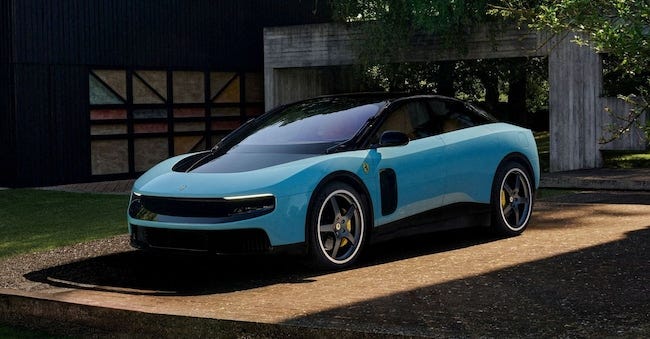
There. I said it early so we can move past it quickly, because frankly the question of whether I like it is the least interesting part of this whole story. For what it is worth, I also never warmed up to the Ferrari Roma, or to most of what Ferrari has put out in the last decade. The last Ferrari that genuinely excited me was the 458 Italia. Clean, purposeful, with a style that felt earned rather than styled. But that is pure personal taste, the kind of thing reasonable people disagree on, and it does not matter one bit for what I actually want to talk about.
The real problem is not the car
When the Luce was unveiled, the reaction in Italy was something to behold.
Not just “I don’t like the design”. Not even “I’m not sure about the direction”. Something closer to a national emergency. Comment sections, automotive forums, television segments, LinkedIn posts from people who definitely have never driven anything more exciting than a diesel SUV: all united in one sacred conviction.
Ferrari must not change.
Not the proportions, not the powertrain, not the concept. Ferrari must remain the eternal shrine of roaring engines, aggressive lines, and a very specific flavor of Italian identity that seems to be equal parts testosterone, tricolor flag and the ghost of Enzo1. The car must be loud. It must be fast in a way that is vaguely threatening. It must be, above all, the same.
Any deviation from this is not innovation. It is betrayal.
And here is where things get genuinely interesting, because this reaction says almost nothing about the Ferrari Luce and quite a lot about how Italy processes the concept of change.
Enzo was a conservative and innovative at the same time
There is a beautiful irony hiding in all of this that nobody seems to want to acknowledge.
The very man whose legacy everyone invokes when demanding that Ferrari never change was, in his time, one of the most disruptive figures in the automotive world.
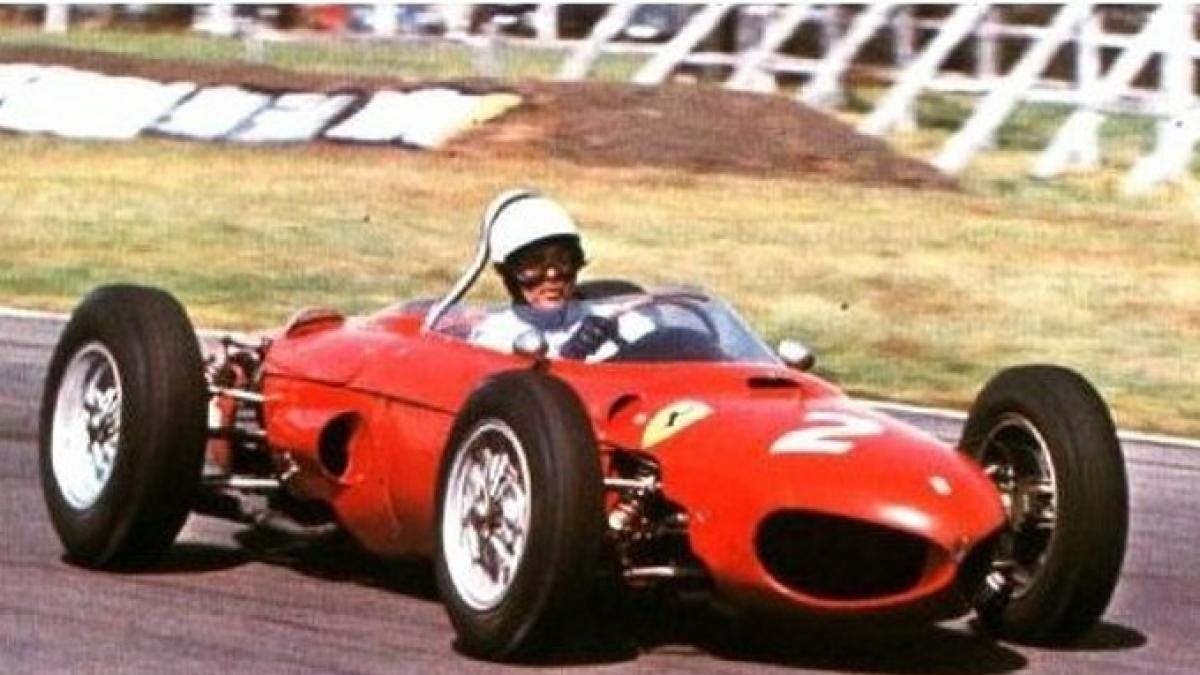
In the early 1950s, when most manufacturers were still building cars that were essentially prewar designs with a fresh coat of paint, Enzo was experimenting with mid-engine layouts that would have seemed almost absurd to the establishment. The 1961 Ferrari 156, the famous “Sharknose”, introduced a front-mounted radiator inlet configuration that was unlike anything else in Formula 1 at the time. The cars were not conservative exercises in giving customers what they expected. They were provocations.
Enzo famously had very little patience for the opinions of buyers. There is a version of that story, perhaps embellished over the decades, in which he essentially told a customer who complained about the clutch of his Ferrari to go back to driving his tractor. The customer’s name, incidentally, was Ferruccio Lamborghini. A man who, having been dismissed so memorably, decided to go and build his own sports cars. You may have heard of the brand. Whether the exact words exchanged between the two are accurate or not, the sentiment is well documented. Enzo was not in the business of asking permission to innovate.
He sold road cars primarily because they funded his racing program. The road car was a means to an end. The end was winning races, and winning races required doing things differently, constantly, sometimes uncomfortably.
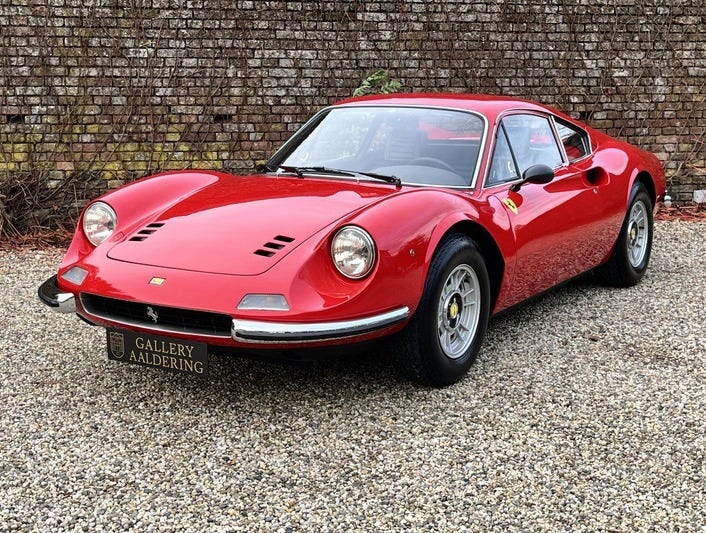
And the controversies were not limited to racing. When Ferrari introduced the Dino in the late 1960s, a road car powered by a V6 engine rather than the sacred V12, the reaction from purists was one of genuine outrage. A Ferrari with six cylinders was considered almost insulting. The V12 was not just a technical choice, it was a theological position. Enzo even refused to badge it as a Ferrari officially, naming it after his late son Alfredo instead, perhaps anticipating exactly that reaction. Today the Dino 246 is one of the most revered and sought-after cars the company ever produced. The same people who would have complained about it in 1969 would now tell you it represents the true soul of Ferrari.
The pattern is almost too neat to be believable, but there it is. Nearly every innovation that defines what people today call the “true Ferrari” was, at the moment of its introduction, criticized as a deviation from what Ferrari was supposed to be.
But here is the part that the Enzo worshippers really do not want to hear.
Enzo was also wrong about a lot of things. Famously, stubbornly, sometimes expensively wrong. He resisted aerodynamic development in Formula 1 for years while competitors were extracting serious performance from wings and downforce. He had a famous saying about engine placement:
“i cavalli stanno davanti al carro, non dietro”
that literally means:
“the horses go in front of the cart, not behind”
A poetic line. Also completely wrong from an engineering standpoint, as the mid-engine revolution in both racing and road cars would go on to demonstrate beyond any reasonable doubt. Ferrari eventually adopted mid-engine layouts and won with them, but not without Enzo dragging his feet considerably.
So the full picture of Enzo Ferrari is not that of an infallible visionary whose every instinct should be venerated. It is the picture of a complicated, brilliant, deeply opinionated man who was right about some things, wrong about others, and who operated in a very specific historical moment in a very specific cultural context. He was a great symbol for that Italy and that world: postwar reconstruction, a country rebuilding its identity around craftsmanship and speed, an era where a roaring engine on a racing circuit meant something almost political. That context no longer exists. The world has moved, the industry has moved and the customers have moved.
Invoking the spirit of Enzo Ferrari as an argument against an electric car in 2025 is a bit like invoking the spirit of a master blacksmith as an argument against the combustion engine. The reverence might be genuine. The argument is still nonsense.
The people defending “the spirit of Enzo Ferrari” by demanding that Ferrari never produce an electric vehicle might want to sit with all of that for a moment.
What the Luce is actually trying to say
Now, I don’t think the Luce is a perfect product. I am not even sure it is a particularly good one, but for reasons that have little to do with the design or the powertrain.
Here is my actual read of the situation.
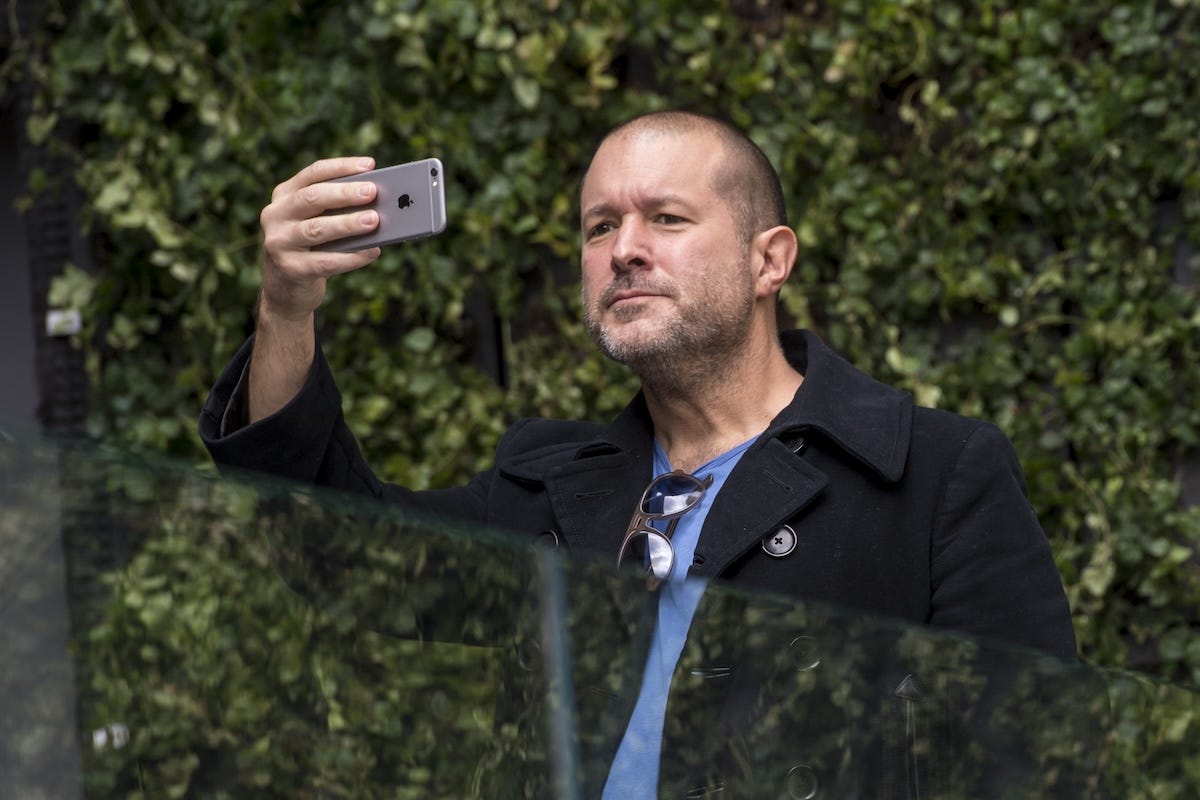
Ferrari and Jony Ive2, the designer behind the Luce and also the person responsible for the iPhone, the iMac and most of what made Apple visually iconic for two decades, seem to have read the same signal. The signal is this: the idea of what a car is is changing. For a long time, a car was a status object. A Ferrari specifically was a very loud, very visible declaration of wealth, power and a certain kind of masculinity that did not need to justify itself. You did not drive a Ferrari to get somewhere. You drove it to be seen driving it.3
Tesla changed that. Not because of the batteries, but because of the concept. The archetypal Tesla customer is not buying a status symbol in the traditional sense. They are buying a service, a piece of technology, something that fits into a life organized around minimalism and convenience. The status signal is different: it is about being early, being aligned with the future, having taste of a particular Silicon Valley vintage.
Ferrari and Ive seem to have concluded that ultra-luxury is heading in a similar direction. That the next generation of buyers for a car at this price point might want something that looks less like a tribute to combustion and more like an artifact from a slightly different civilization.
I think that read is directionally correct.
I also think the Luce may be arriving before the market is ready for it. The customer who spends that kind of money on a car today is still, largely, buying the old story. The minimalism-as-luxury customer exists, but they are mostly buying a Porsche Taycan or a Tesla Model S Plaid, not a half-a-million Ferrari. The market for a very expensive electric car that looks like a concept sketch has not quite materialized yet at the volume Ferrari would need.
So the Luce might be wrong as a product. But it is wrong for the right reasons. It is wrong in the direction of the future rather than in the direction of comfort.
Innovation as blasphemy
This brings me back to the real subject of this piece, which is not really about a car at all.
Italy has a complicated relationship with innovation.
There is enormous creative talent here, a genuine tradition of design and craftsmanship that is not mythological, it is real and documented. And yet, in certain sectors and cultural conversations, the instinct to preserve tends to overwhelm the instinct to explore.
When Ferrari builds an electric grand tourer with a radical design philosophy, the response is not curiosity. It is not “let us see where this leads”. It is panic dressed up as tradition.
If you innovate, you are committing blasphemy.
And yes, not all innovation is good. I want to be honest about that. Some things that get called innovation are just change for its own sake, novelty without purpose, disruption as a brand strategy. The world is full of innovations that turned out to be mistakes.
But the alternative, the insistence that certain things must never change, that certain institutions must remain frozen in the moment of their greatest cultural resonance, is not a defense of quality. It is taxidermy.
Ferrari trying something genuinely different is not a crisis. It is what companies are supposed to do when they see the context they operate in shifting beneath them. You can disagree with the specific choices. You can think Jony Ive’s aesthetic sensibility is wrong for a car. You can think the timing is off. These are all legitimate positions.
But the argument that Ferrari must remain an eternal monument to a very specific mid-twentieth century idea of Italian masculinity and automotive power is not a position about quality or heritage.
It is a position about fear.
And that, more than any design choice on the Luce, is the thing worth examining.
Enzo Ferrari, for context, was not exactly known for listening to popular opinion. The irony of invoking him as a reason to resist change is remarkable.
Jony Ive left Apple in 2019 and has since founded LoveFrom, his independent design studio. The collaboration with Ferrari for the Luce represents one of his most high-profile post-Apple projects.
From my petrolhead POV, this is obviously sad to admit but that’s it. The 99% of people buy Ferrari’s cars for the status symbol, not for the driving feeling.